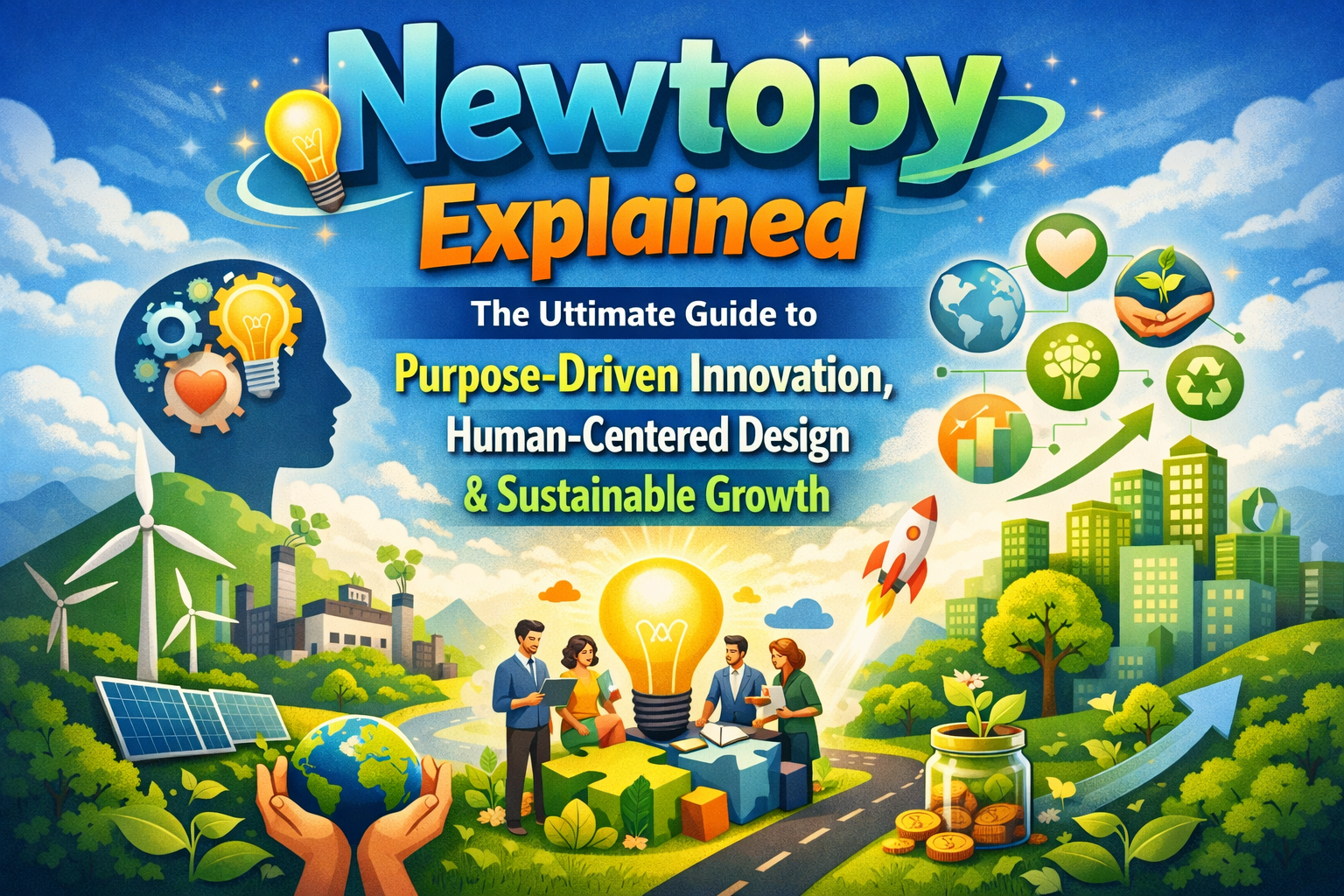
In an era defined by rapid technological change and increasing social complexity, traditional definitions of progress are being reexamined. People everywhere are asking a different question: What does it truly mean to innovate in a way that benefits humanity — not just markets? The answer lies in a new philosophical and practical approach called Newtopy.
This comprehensive guide explores what Newtopy is, why it’s emerging now, how it’s reshaping technology and human experience, and how you can apply its principles in your personal life, business, and communities. If you’re ready to embrace meaningful innovation that aligns purpose with progress, this is your definitive starting point.
Introduction – Why Newtopy Matters in Today’s World
We live in a paradox: we have more tools, data, and connectivity than ever before, yet many people report greater stress, distraction, and disconnection. Studies show that despite living in the most digitally connected era in history, loneliness and burnout rates have climbed significantly over the past decade.¹ At the same time, technology companies race to add features and capture attention, often at the expense of depth, wellbeing, and meaningful human outcomes.
This discrepancy between innovation and impact is where Newtopy finds its relevance. Not a buzzword, and not a passing trend, Newtopy proposes a thoughtful approach to building systems—digital, physical, and social—that prioritize purpose over profit, meaning over novelty, and human flourishing over superficial growth.
The Rise of Meaningful Innovation
Unlike previous waves of innovation that prized speed and scale above all else, Newtopy emphasizes long‑term value, ethical resonance, and human context. This shift reflects deeper cultural transformations:
- Increasing consumer demand for ethical brands.
- Rising awareness of mental health impacts of digital overload.
- Growing interest in sustainability and regenerative systems.
The businesses and individuals thriving today are those who do not merely move forward — they question why they are moving forward at all.
What is Newtopy? Definition, Origin & Philosophy
At its essence, Newtopy is a worldview and framework for innovation that integrates interconnected systems thinking, human‑centered design, iterative progress, and sustainability.
The word itself stems from two root ideas:
- “New” — innovation, evolution, and change.
- “Topy” (as in utopy/utopia) — an aspirational vision of better ways of living and organizing systems.
However, unlike utopia’s static idealism, Newtopy is dynamic, adaptive, and rooted in practice, not perfection.
The Meaning and Origin of the Word “Newtopy”
The concept of Newtopy first circulated in niche innovation forums and design communities where thinkers struggled to capture the difference between technology for technology’s sake and innovation that serves people. Over time, it evolved into a philosophical lens that applies across domains — from urban planning to product design, from organizational culture to personal development.
At its core, Newtopy rejects isolated solutions and invites us to view systems as interrelated, impacted by human behavior, ecological limits, ethical choices, and long‑run viability.
The Core Philosophy Behind Newtopy
Newtopy is anchored in four foundational pillars:
Systems Thinking for Interconnected Solutions
Rather than treating problems as separate and siloed, Newtopy encourages creators to see relationships, dependencies, and emergent dynamics within an ecosystem. In practice, this means considering:
- How technologies affect social behavior.
- How products integrate into users’ lives.
- How economic incentives align (or conflict) with human wellbeing.
By mapping these connections, innovators can design solutions that harmonize with larger systems instead of conflicting with them.
Human‑Centered Design Principles
Human needs aren’t monolithic — they vary across contexts, cultures, and life stages. Newtopy emphasizes empathy, accessibility, and agency, focusing on:
- What problems people actually have.
- How solutions support dignity and growth.
- Avoiding designs that manipulate or exploit users.
This emphasis aligns with a broader movement in design thinking that places people — not machines — at the heart of innovation.
Progress Through Iteration
Utopian visions imagine perfection. Newtopy embraces perpetual refinement. This perspective acknowledges:
- Mistakes are inevitable but informative.
- Continuous feedback improves outcomes.
- No final destination exists — just better versions over time.
Think of Newtopy as progress with memory — learning from the past to inform better futures.
Sustainability and Longevity
In contrast to disposable culture and rapid obsolescence, Newtopy values durability — both ecological and social. Sustainable practices are not add‑ons but central design criteria. This often translates into:
- Choosing materials and methods that reduce waste.
- Designing business models that reward maintenance over churn.
- Prioritizing long‑run community benefits over short‑term gains.
The Three Faces of Newtopy
One reason Newtopy resonates across so many sectors is that it manifests differently depending on context. In fact, there are three core expressions of Newtopy:
Newtopy as a Conceptual Framework
This is the philosophical layer: a way of thinking that transcends industries. Urban planners, for example, use principles aligned with Newtopy when they design smart cities that balance:
- Technology integration
- Ecological preservation
- Social equity
Rather than deploying one‑off solutions, they consider how transportation, housing, energy, and social services interact holistically.
Newtopy as a Technology Platform
Some digital tools and platforms explicitly adopt Newtopy principles by:
- Reducing cognitive overload
- Prioritizing user wellbeing
- Integrating disparate systems into coherent experiences
Unlike feature‑bloated apps, Newtopy‑aligned platforms emphasize clarity and cohesion.
Newtopy as a Lifestyle and Personal Mindset
Beyond products and systems, Newtopy influences how people approach their own lives. It asks:
- What tools enhance my wellbeing vs distract me?
- How does my environment shape my behavior?
- What routines support growth and balance?
Applied at a personal scale, Newtopy encourages intentional living — not perfection.
How Newtopy is Changing the Way We Build
Newtopy isn’t just theory. It’s reshaping how people and organizations create:
In Technology – Tools that Reduce Digital Noise
Tech products inspired by Newtopy prioritize focus and clarity. Instead of overwhelming users with notifications and constant updates, they:
- Streamline interfaces
- Reduce unnecessary features
- Support mindful engagement
For example, minimalist productivity tools that limit distractions align perfectly with Newtopy’s human‑centered ethos.
In Business & Innovation – Ecosystem Thinking and Purpose‑Driven Growth
Rather than focusing exclusively on quarterly earnings, companies adopting Newtopy principles:
- Align products with human needs
- Build partnerships instead of competing destructively
- Invest in communities to create shared value
This shift mirrors a broader trend in business: purpose‑driven growth.
In Design & Architecture – Mindful, Human‑Centric Spaces
Physical spaces — homes, offices, public environments — can either enhance human wellbeing or undermine it. Newtopy‑inspired design features:
- Natural light and air flow
- Adaptable layouts
- Materials that resonate with ecological stewardship
Such environments support calmness, productivity, and connection.
Benefits of Embracing the Newtopy Mindset
Organizations and individuals adopting Newtopy report transformative benefits — because it rewires how decisions are made.
Enhanced Focus and Clarity
By clarifying purpose and eliminating unnecessary noise, Newtopy helps decision‑makers stay aligned with what truly matters, reducing wasted effort and cognitive friction.
Deeper Human Connection
When innovations center on real needs rather than surface desires, relationships deepen. Customers become advocates. Communities become participatory — not passive.
Stronger Trust and Credibility
Transparency and ethical considerations build trust. Studies show that consumers now prefer brands that demonstrate real commitments to ethical values — not just marketing claims.²
Sustainable, Long‑Term Innovation
Solutions designed for longevity avoid the churn cycle of constant replacement. This improves resource efficiency and fosters stability rather than waste.
Challenges and Misunderstandings
Despite its promise, Newtopy is often misunderstood.
Common Criticisms of Newtopy
Some detractors dismiss it as “another buzzword.” Others argue that human‑centered innovation cannot coexist with profit motives. But these critiques misunderstand the essence: Newtopy isn’t anti‑profit — it’s pro‑purpose.
Purpose‑First vs Profit‑First Dilemma
The real challenge for many organizations isn’t the idea, but the implementation. Shifting from short‑term metrics to long‑term impact requires leadership, patience, and strategic alignment.
Avoiding “Buzzword” Misuse
Newtopy loses meaning when it’s just slapped onto marketing materials without real changes in process or intent. Authenticity is crucial.
How to Apply the Newtopy Mindset in Real Life
Whether you’re an individual, a business leader, or a creator, Newtopy can be applied practically.
For Individuals – Living the Newtopy Way
Start small:
- Declutter digital tools that don’t enhance wellbeing
- Curate your physical environment for calm and focus
- Prioritize progress over perfection
Intentional living fosters resilience and purpose.
For Businesses – Building with Meaning
Organizations can apply Newtopy by:
- Mapping ecosystems rather than isolated parts
- Designing feedback loops into products and services
- Choosing partnerships that co‑create value
Purpose‑driven organizations don’t just survive; they shape their markets.
For Creators and Innovators – Purpose‑Driven Work
Creators can leverage Newtopy to:
- Understand audience realities before building
- Build communities, not just content
- Focus on authenticity over trendiness
This approach builds lasting influence rather than fleeting attention.
Practical Implementation Strategies
Here are concrete steps to practice Newtopy thinking:
Start with Systems Mapping, Not Solutions
Before building anything, understand the system you’re engaging with:
- Who are stakeholders?
- What behaviors matter?
- What constraints exist?
Mapping reveals leverage points.
Build Feedback Loops into Everything
Feedback is essential for iteration:
- Regular check‑ins
- Usage analytics
- Community input
These loops prevent stagnation and identify opportunities for improvement.
Prioritize Integration Over Addition
Adding more tools, features, or products often increases complexity. Newtopy asks:
Does this integrate cleanly into existing systems?
If not, reconsider.
Measure Human Outcomes, Not Just Metrics
Productivity scores and adoption rates matter — but so do:
- Emotional wellbeing
- Equity of access
- Sustainability impacts
These deeper measures reflect real success.
Real‑World Examples of Newtopy in Action
Although not always labeled “Newtopy,” many organizations embody its principles.
Patagonia – Purpose Over Profit
Patagonia’s environmental commitments and transparent values illustrate Newtopy in practice: profit with conscious purpose.
Notion & Obsidian – Digital Minimalism
Tools that reduce noise and focus on user needs exemplify digital products aligned with Newtopy thinking.
Slow Living & Slow Tech Movements
Movements that prioritize mindful engagement, sustainable habits, and thoughtful design reflect the broader cultural shifts Newtopy embodies.
Ethical Considerations in Adopting Newtopy
Newtopy demands that we ask deeper ethical questions:
- Are we empowering users or manipulating behavior?
- Do innovations promote fairness and dignity?
- Are access and opportunity equitable?
Ethics are not optional; they’re foundational.
The Future of Newtopy
As technology evolves, Newtopy’s principles will only become more relevant.
Digital Ecosystems & Web 3.0
Decentralized systems that prioritize user agency over extractive data models align with Newtopy’s vision.
Rise of Ethical Technology
From AI ethics to carbon‑neutral computing, the next wave of innovation will be judged by its alignment with human values.
Regenerative Communities and Sustainable Growth
Communities that prioritize regeneration over consumption offer models for how societies can flourish in balance with ecological limits.
FAQs About Newtopy
Is Newtopy a company or a concept?
Newtopy is primarily a conceptual framework and mindset guiding purposeful innovation.
How can I start applying Newtopy principles?
Begin with systems thinking, intentional design choices, and feedback‑oriented implementation.
Do I need special tools to practice Newtopy?
No — the mindset matters more than any specific technology.
Why Newtopy is More Than a Trend
Newtopy spans disciplines, scales to individual lives and entire organizations, and persistently adapts. It bridges ambition with ethics and connects innovation with long‑term human flourishing.
Conclusion – Building a Better Future with Newtopy
The world is not short on innovation — it’s short on meaningful innovation. Newtopy offers a way forward that honors complexity, human dignity, and sustainable progress. It invites us all to ask better questions:
- Are we building for people or for metrics?
- Are we solving real problems or creating distractions?
- Is our innovation regenerative or extractive?
The future won’t be built by those chasing novelty. It will be built by those pursuing what’s better.
ALSO READ: Slylar Box Review 2026: Ultimate Guide to Subscription & Smart Storage