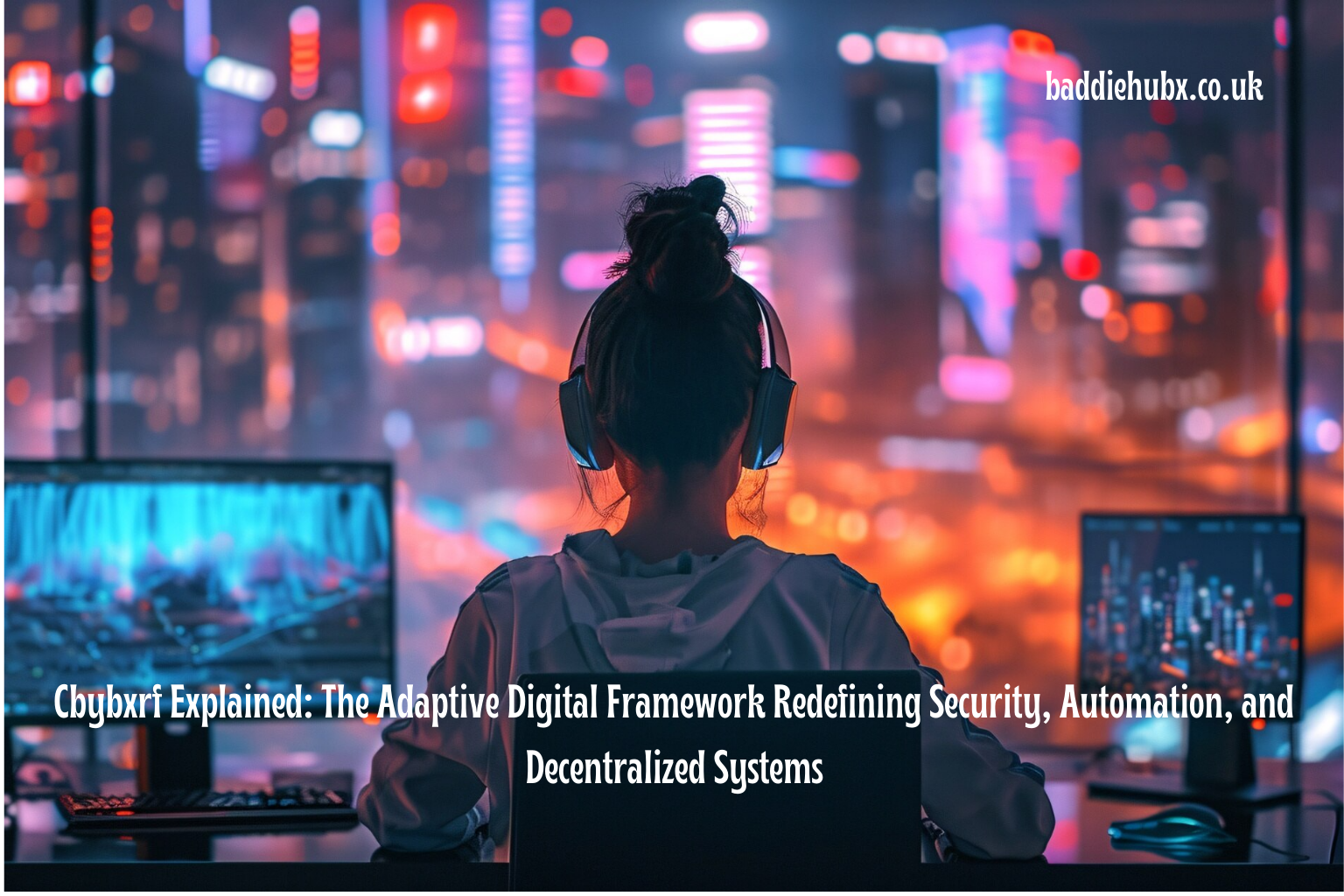
In today’s digital landscape, technology moves faster than ever — but many systems remain rigid, centralized, and vulnerable. Enter Cbybxrf, a next-generation adaptive digital framework that promises to transform the way data, automation, and governance intersect in the modern world.
In this comprehensive guide, we’ll explore what cbybxrf is, how it works, where it’s used, the benefits and challenges it brings, and why it may become a cornerstone of future digital ecosystems.
Introduction to Cbybxrf
Digital transformation has spurred innovation in every industry, yet traditional systems still struggle with complexity, decentralization, and evolving threats. Most digital models today are linear: data flows from point A to point B, automation follows predefined rules, and security is layered on afterward.
Cbybxrf challenges this paradigm. It’s not a single technology, protocol, or software package — it’s a flexible and adaptive framework that combines decentralized logic, intelligent automation, and evolving privacy protocols. Unlike conventional systems, cbybxrf is designed to learn, adapt, and self-govern.
This article explores cbybxrf in depth, breaking down its mechanisms, real-world use cases, risks, and future potential.
What Is Cbybxrf? Meaning, Definition, and Origin
At its core, cbybxrf is an adaptive digital framework that supports secure, autonomous, and decentralized interactions across complex systems. The term itself appears abstract — intentionally so — reflecting its dynamic syntax, evolving structure, and resistance to rigid classification.
Unlike a programming language or standard protocol, cbybxrf functions as meta-architecture: a set of guiding principles, logic rules, and automated layers that enable systems to communicate, evolve, and self-optimize.
Why It’s Unique
- Not hard-coded: It doesn’t depend on fixed command sequences.
- Hybrid structure: Integrates encryption, adaptive logic, and autonomous governance.
- Origins in innovation communities: Evolved from collective contributions rather than a single inventor.
This uniqueness makes cbybxrf difficult to encapsulate within traditional definitions — a sign of the evolving nature of digital systems themselves.
Core Philosophy Behind Cbybxrf
Cbybxrf rests on several foundational ideas:
Adaptive Intelligence
Traditional systems follow predetermined paths. Cbybxrf systems learn from interactions, improving over time without direct intervention.
Decentralization
Instead of central control, cbybxrf promotes distributed decision-making. This is key in contexts like decentralized autonomous organizations (DAOs) and global smart networks.
Privacy-First Design
Rather than tacking on security later, cbybxrf embeds privacy and access control as core functions.
Human-Aligned Automation
Cbybxrf doesn’t aim to eliminate people — it aims to support them by automating repetitive tasks while respecting human decisions and ethical norms.
This philosophy positions cbybxrf as a framework that prioritizes trust, adaptability, and collaboration over rigid command structures.
How Cbybxrf Works in Practice
To understand cbybxrf, we need to break down its operational concepts:
Multi-Layered System Architecture
Cbybxrf systems organize digital environments into multiple interacting layers:
- Infrastructure layer: Manages data transport and hardware interaction.
- Logic layer: Applies adaptive, behavior-aware rules.
- Interaction layer: Interfaces with users or external systems.
This layered design allows cbybxrf to manage complexity without centralized bottlenecks.
Non-Linear and Decentralized Data Flow
Instead of a linear A→B model, cbybxrf supports multi-directional data streams. Data can dynamically choose the most efficient route and be processed in parallel across nodes.
Internal Validation and Self-Governance
Cbybxrf performs self-validation — decisions and transactions are verified internally via distributed logic rather than relying on external validation services.
Behavior-Aware System Responses
One of cbybxrf’s most novel aspects is its integration of behavioral analysis. User patterns, intent signals, and interaction cues influence system responses, creating personalized and context-aware outputs.
Key Features That Make Cbybxrf Unique
Understanding cbybxrf’s power requires a closer look at its defining features:
Adaptive Encryption and Privacy
Cbybxrf employs encryption that adjusts visibility based on user permissions, behavior cues, and system context. This makes it harder for external threats to map or exploit data.
Self-Healing and Self-Optimizing Systems
Like living organisms, cbybxrf systems can detect weaknesses or inefficiencies and correct them automatically.
Intelligent Scalability
Whether handling hundreds or millions of interactions, cbybxrf scales dynamically without performance loss.
Cross-Platform Compatibility
Because cbybxrf doesn’t rely on a fixed language or static rules, it can integrate with diverse technologies and platforms seamlessly.
Continuous Evolution
Rule sets within the framework adapt over time based on observed patterns — this long-term learning capacity distinguishes cbybxrf from rigid architectures.
What Cbybxrf Actually Does for Digital Systems
When properly implemented, cbybxrf transforms how systems manage data and processes:
Data Organization and Interoperability
Disparate systems — such as CRM, ERP, scheduling, and analytics tools — begin to communicate smoothly.
Automation with Human Oversight
Repetitive tasks (e.g., scheduling, routing, monitoring) can be automated while leaving strategic decisions to humans.
Faster, Insightful Reporting
Data that once required days to analyze can now produce insights in a matter of hours.
Reduced Operational Bottlenecks
Systems communicate more effectively, preventing silos and breakdowns.
In essence, cbybxrf makes systems smarter, faster, and more intuitive.
Real-World Applications of Cbybxrf
Although cbybxrf remains a conceptual framework in many respects, implementations inspired by its principles already exist in several industries:
Healthcare and Medical Data Management
Hospitals and clinics use adaptive frameworks to:
- Streamline patient records
- Predict risk factors based on patterns
- Improve diagnostics with contextual insights
Adaptive patient management systems can reduce response times and improve outcomes.
Financial Systems and Fraud Prevention
Financial institutions process millions of transactions. Cbybxrf-like logic can flag unusual behavior in real time, reducing fraud and improving customer trust.
Manufacturing and Supply Chain Automation
Factories increasingly rely on automation to monitor inventory, manage quality control, and streamline logistics — all areas where cbybxrf’s decentralized, adaptive logic provides value.
Education and Adaptive Learning Platforms
Educational software can dynamically adjust instruction difficulty, track engagement patterns, and provide personalized learning pathways.
E-commerce Personalization and Ethical Targeting
Rather than generic suggestions, systems can prioritize ethical user preferences and behavior-indicated needs.
Logistics, Transportation, and Smart Routing
Fleet planning — adapting routes based on traffic, weather, and delivery urgency — aligns well with cbybxrf design logic.
Cbybxrf in Digital Governance and Decentralized Networks
One of cbybxrf’s most promising areas is distributed governance.
Traditional governance models are centralized — decisions come from single authorities. Cbybxrf encourages:
- Distributed decision-making
- Self-regulated communities
- Transparent rule execution
This is especially important in blockchain ecosystems, decentralized autonomous organizations (DAOs), and global digital collaboration platforms.
Users retain control over identity and data, while the system ensures ethical and transparent operation.
Security and Privacy Advantages of Cbybxrf
Security isn’t an add-on in cbybxrf — it’s baked into the logic structure.
Adaptive Threat Detection
Instead of static rules, cbybxrf learns what “normal” behavior looks like and flags anomalies.
Obfuscation and Tiered Access Control
Sensitive data remains usable but hidden based on context — even within authorized environments.
Consistent Security Standards
Rather than having disparate protections across systems, cbybxrf unifies security protocols.
Auditability
Every interaction — including access and decisions — can be logged and reviewed, enhancing compliance.
These features make cbybxrf suitable for high-risk environments, including financial institutions, hospitals, and government systems.
The Behavioral Dimension of Cbybxrf
Another distinctive dimension is its ability to integrate behavioral insights.
User Intent Recognition
Rather than simply reacting to commands, cbybxrf evaluates patterns: frequency, timing, choice clusters, and more.
Ethical Personalization
Systems can optimize recommendations based on values (e.g., sustainability preferences) rather than just past purchases.
Emotional and Contextual Responsiveness
By examining interaction signals, cbybxrf systems can tailor contextually relevant responses — a frontier in UX design.
This human-aligned adaptability makes the framework particularly effective in educational, clinical, and social platforms.
Culture, Philosophy, and the Mythology of Cbybxrf
Within innovation communities, cbybxrf has accumulated a quasi-philosophical significance.
Cbybxrf as a “Living System”
Because it evolves, learns, and adapts, many specialists view it as more than technology — almost organic.
Digital Sovereignty
Users retain control over identity, data, and interactions without intermediaries.
Community-Driven Evolution
Rather than proprietary development, cbybxrf thrives in open communities that contribute patterns and logic rules.
While some of this is speculative, it reflects a broader cultural movement toward people-centered digital systems.
Benefits of Adopting Cbybxrf
Businesses and institutions that implement cbybxrf-inspired systems report multiple benefits:
Increased Efficiency
Automated data flows and adaptive logic reduce manual overhead.
Reduced Downtime
Self-healing systems correct issues before they escalate.
Lower Long-Term Operating Costs
Dynamic automation replaces rigid, high-maintenance infrastructure.
Improved User Satisfaction
Personalized and context-aware systems feel more responsive.
Future-Proof Scalability
Whether usage grows 10x or 100x, cbybxrf adapts.
By fostering efficiency, security, and adaptability, cbybxrf helps systems stay competitive.
Challenges, Risks, and Ethical Considerations
Despite its promise, cbybxrf isn’t without challenges:
Technical Complexity
Implementing adaptive learning frameworks requires deep expertise.
Data Privacy Governance
More fluid data flows mean stronger governance policies are needed.
Risk of Misuse
Adaptive systems could be exploited if not properly monitored.
Automation Ethics
Who defines moral baselines for autonomous behavior?
These concerns must be addressed in planning and governance frameworks.
How to Implement Cbybxrf Successfully
For organizations considering adoption:
Start with Pilot Programs
Test in a controlled department before full rollout.
Choose the Right Partners
Not all implementations are created equal — select vendors with real integration experience.
Invest in Training
Human adoption is as important as technical setup.
Define KPIs and Metrics
Efficiency gains, cost savings, and user satisfaction should be measurable.
This measured approach reduces risk and increases adoption success rates.
The Future of Cbybxrf
Looking ahead, cbybxrf may evolve in several directions:
AI-Driven Prediction and Decision Systems
Data prediction and autonomous resolution will become stronger.
Smart Cities and Automated Governance
Public services could adapt in real time.
Blockchain-Based Trust Layers
Immutable audit trails enhance compliance and accountability.
Machine-Language Revolution
Devices and systems may communicate through patterns rather than code.
Global Digital Intelligence Networks
A connected subconscious of systems could accelerate innovation.
Final Thoughts on Cbybxrf
Cbybxrf represents a bold shift in how technology interacts with data, users, and autonomous systems. More than a framework, it embodies a new philosophy of adaptive, human-aligned digital evolution.
As systems grow more complex and interconnected, frameworks like cbybxrf will become increasingly important — not just for efficiency, but for trust, security, and ethical innovation.
If enterprises and communities can adopt it responsibly, cbybxrf may very well define the next era of digital transformation.
Frequently Asked Questions About Cbybxrf
Q: Is cbybxrf a programming language?
A: No — it’s a flexible digital framework.
Q: Who can use it?
A: Businesses, governments, institutions, and platforms with complex data needs.
Q: Is it safe?
A: With proper governance, yes — it enhances privacy and security.
Q: Does it replace humans?
A: No — it augments human decision-making.
ALSO READ: Plangud: Meaning, Uses, Planning System, Wooden Planks & Future Explained (Complete Guide)