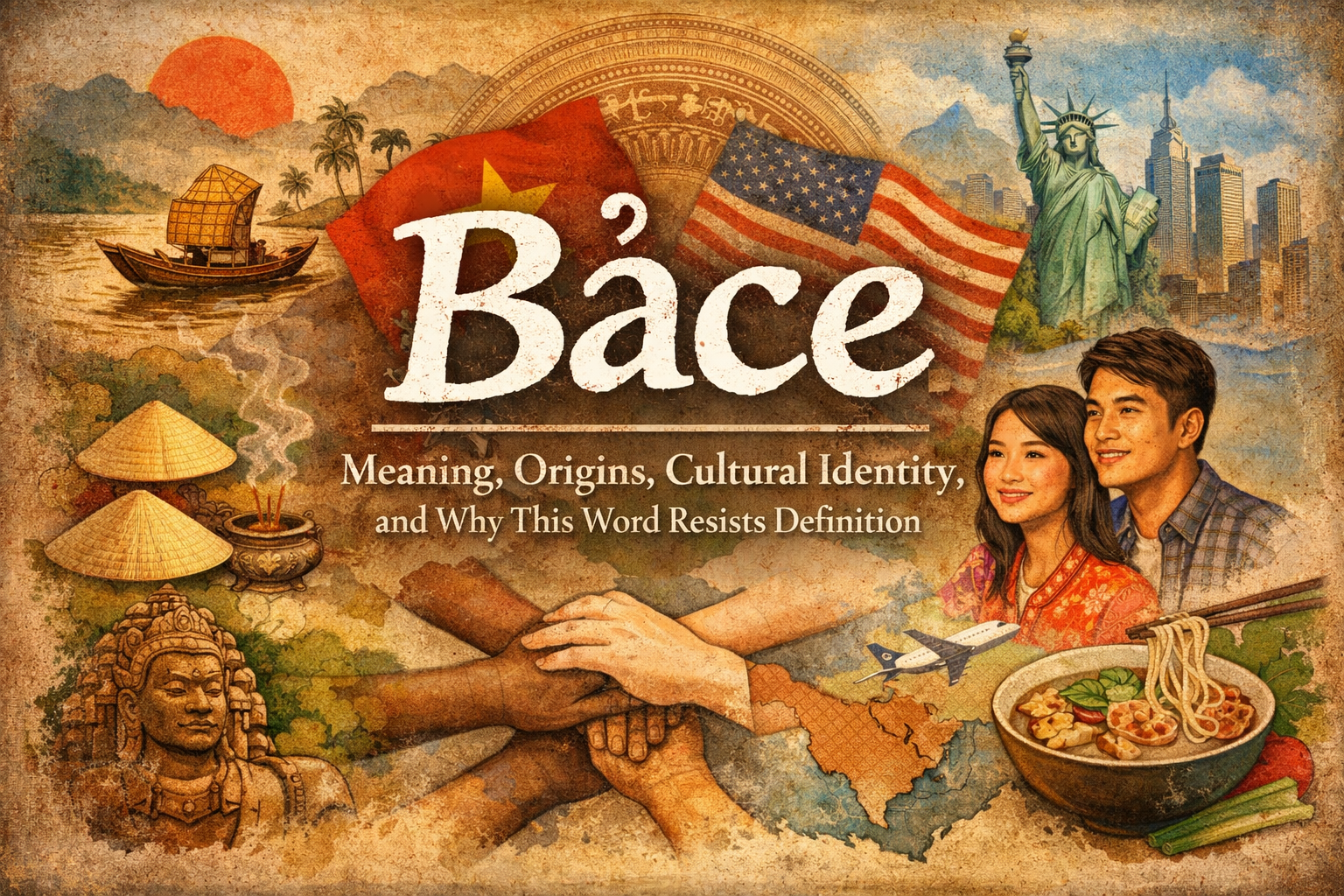
Introduction: Why Bảce Cannot Be Explained in One Sentence
In an age where definitions are often locked behind dictionaries and database entries, Bảce stands apart. It’s not easily summed up in a single line or pinned down in an encyclopedia page. Instead, it lives across language, history, geography, identity, and even modern branding and technology. The term doesn’t ask to be defined — it reveals itself slowly, through usage, context, and cultural memory.
Unlike most words that settle into a fixed meaning, Bảce resists closure. It overlaps tradition and interpretation, residing in the spaces between literal definition and emotional resonance. This article explores what Bảce is, why it matters, and how its open-ended nature makes it meaningful in ways that neat definitions often miss.
What Is Bảce? Meaning That Changes With Context
At first glance, Bảce might look unfamiliar or stylized, but its strength lies precisely in its flexibility. In some contexts, it feels like a concept of origin or identity; in others, it serves as a linguistic artifact or a signifier in branding and culture.
Rather than being a dictionary word with a fixed definition, Bảce gains meaning through context. It has functioned historically in language variations, exists physically as a place name, and today carries symbolic weight in modern discourse — from cultural identity to digital naming. To understand Bảce, we must look beyond static definitions and watch how it moves through time and usage.
Bảce as Origin, Foundation, and Identity
One way to think about Bảce is as a notion of foundation. It suggests where something comes from — its base or root. Although not widely established in formal lexicons, this idea of origins and identity is echoed in how people use the term and the kinds of discussions it enters. In conversation, Bảce can evoke a sense of belonging or grounding rather than a single fixed meaning.
Why Bảce Has No Single Fixed Meaning
Language is living and fluid. Words accumulate layers of meaning over time, influenced by place, culture, and usage. Bảce exists at the crossroads of these influences, making it difficult — and perhaps unnecessary — to pin down. It evolves with the contexts it inhabits, always adapting yet never completely settling into one distinct sense.
Context Over Dictionary Authority
Traditional language authorities seek consistency and stability. In contrast, Bảce thrives in spaces where meaning is negotiated, lived, and interpreted. This is not confusion — it is engagement. Bảce requires the reader or listener to meet it halfway, deriving significance from experience, not just definition.
The Linguistic Roots of Bảce
Words like Bảce remind us that language was once far less regulated than it is today.
Long before standardized spelling and strict grammatical rules, scribes and writers recorded language as it sounded, varied by region and speaker. In those earlier eras, spellings bent and drifted freely, and written forms reflected spoken language more than rigid dictionaries. In that linguistic landscape, forms like bace, Bace, or related variants might appear without ceremony or institutional approval — simply because language evolves “on the ground.”
In this environment, language belonged to its users, not to rulebooks. Words acquired force not through standardization but through lived usage.
Bảce in Pre-Standardized English
Before English spelling rules solidified in the 18th and 19th centuries, written English was highly variable. Scribes wrote phonetically and regional dialects shaped spelling. Although bảce didn’t become a dominant word, similar forms could appear and circulate without ever being formally codified.
This fluidity is key to understanding why Bảce doesn’t fit neatly into dictionary categories today: it represents a moment in linguistic history when words were shaped by usage, not authority.
Accents, Diacritics, and the Power of the “ả”
When we write “Bảce” with an accent over the a, something changes: the word feels intentional.
Accents and diacritics signal nuance — they communicate that a word carries more texture than its plain counterpart. In languages like Vietnamese, tonal markings such as ả influence meaning profoundly. Although “Bảce” itself isn’t a Vietnamese word, the use of a diacritic signals cultural layering and aesthetic choice. The accent gives the term visual rhythm and invites deeper attention from the reader.
Why the Accented Form Feels Intentional
An accent mark, especially in otherwise familiar Latin script, suggests something distinctive — a deliberate choice rather than a typographical error. It hints at influence, presence, and history without spelling out exactly what those forces are.
This visual distinction helps Bảce stand out in text, capturing reader attention and opening space for interpretation rather than limiting understanding.
Bače, Serbia: When Bảce Becomes a Place
While Bảce represents linguistic and conceptual fluidity, Bače — spelled without a diacritic — is a real geographic place.
Located in the Toplica District of southern Serbia, Bače (Баце in Cyrillic) is a small village in the municipality of Prokuplje. It exemplifies rural continuity and cultural identity in a way that language alone cannot.
Population and Demographics
According to census data, Bače had:
- 284 residents in 2002.
- Around 230 inhabitants in 2011.
More recent estimates from statistical modeling indicate shifting population trends common to rural areas in Serbia — with small and aging populations and gradual decline over decades.
Despite its small size, the village of Bače represents something larger: steadfast presence. Its name survives through census records, maps, and local memory, just as the concept of Bảce survives in language and culture.
Small Places and Long Memory
Villages like Bače often lack the infrastructure and visibility of cities, yet they carry continuity. Family histories, land, agricultural practices, and local traditions persist for generations. These places don’t market themselves or chase external validation; they simply exist. In that way, Bače reinforces the idea that certain names endure not because of promotion, but because they are woven into the fabric of daily life.
In Bače, the name is not branding — it’s routine, familiar, and grounded.
Bảce and Cultural Memory
Culture is not only preserved in textbooks and archives; it lives in everyday language, practices, and regional customs.
Words carry histories. Names evoke memories long before they are written down. When people say where they are from, the words they use aren’t generic labels — they are markers of belonging.
For instance, in many traditional communities, oral tradition preserves language forms that never entered formal record. These speech patterns and names exist in storytelling, place names, and family lore.
Bảce fits into this tradition: it’s carried forward through usage rather than dictionaries.
Identity Beyond Documentation
Words tied to identity — whether family names, village names, or regional terms — often survive precisely because communities treat them as markers of belonging. They aren’t curated for external approval but maintained through lived experience.
Bảce evokes this pattern. Unlike trendy words curated for search engines, its resonance comes from deep within the lived world of language and place.
Why Modern Culture Is Drawn to Bảce
In the digital age, many people crave ambiguity. Clean definitions, once a source of clarity, can feel constrained or overmanaged. In contrast, terms that resist precise definition — that leave room for interpretation — invite curiosity.
Bảce captures this modern appetite for texture and openness. Its accented form pulls the eye. It feels intentional and familiar without being fully explainable.
People today often seek language that feels:
- Authentic
- Contextually rich
- Open to interpretation
Bảce meets these preferences without trying too hard.
Bảce in Branding and Digital Identity
Modern brands increasingly look for names that feel:
- Distinctive
- Emotionally resonant
- Visually appealing
Bảce ticks those boxes. Its spelling, especially with an accent, stands out in logos, domain names, and brand narratives.
Rather than offering complete explanation upfront, the name invites audiences to build their own associations. This approach aligns with story-driven branding, where identity is shaped as much by perception as by explicit definition.
Because Bảce doesn’t announce its meaning, it becomes a narrative tool rather than a fixed label.
Bảce in Technology and Systems Thinking
Beyond culture and branding, Bảce resonates in digital systems and conceptual frameworks.
In technology, terms borrowed from everyday language often become metaphors for foundational ideas — like “base,” “core,” or “identity layer.” These words help non-technical users grasp complex systems.
Bảce serves as a metaphor for foundational layers in technology:
- base architecture
- core identity systems
- starting points for design
Using human language to describe digital systems makes technology seem less alien and more accessible. Bảce becomes a human-centric metaphor — one that bridges conceptual complexity and intuitive meaning.
BACE as an Acronym: When Meaning Becomes Controlled
While Bảce thrives in ambiguity, the uppercase BACE has very different associations.
In scientific and institutional contexts, BACE is known as the beta-site amyloid precursor protein cleaving enzyme, commonly referred to as BACE1. This enzyme plays a crucial role in Alzheimer’s disease research and drug development, where it cleaves the amyloid precursor protein, initiating the formation of amyloid-β plaques — a hallmark of Alzheimer’s pathology.
Because this use of BACE is highly technical, it represents the opposite of the open, evolving meaning of Bảce. As an acronym, it must be precise and unambiguous — essential in scientific and medical discourse.
Why Bảce Survives Without Promotion
Many words disappear because they lack cultural traction. Others are propelled into prominence by marketing, media trends, or institutional authority. Bảce survives differently: it persists quietly through flexibility, location, and lived usage.
There’s no campaign to assign a fixed definition to Bảce — and that’s part of its resilience. It doesn’t chase attention; it simply exists where it matters.
This kind of survival is rare. Trends fade, branding cycles change, and even popular words come and go rapidly. Words that endure — like Bảce — often do so by staying useful, adaptable, and rooted in lived contexts.
Cultural Memory vs Internet Discovery
In a world where algorithmic visibility is often equated with value, Bảce challenges that assumption.
Search engines and social platforms can elevate obscure terms into viral sensations, but visibility is not the same as meaning. Bảce mattered long before algorithms recognized it. Its roots lie in language and place, not in search trends.
Understanding this difference is crucial: learning about Bảce builds real insight, while extracting it merely for novelty misses its true significance.
Bảce as a Philosophy of Restraint
There’s a lesson in Bảce that goes beyond language: restraint in interpretation can be powerful.
In a culture that often demands instant explanation, Bảce suggests that not all meaning needs to be fully unpacked. Sometimes ambiguity invites deeper engagement. By resisting final definition, Bảce encourages patience and reflection — a rare quality in an age of rapid consumption.
This philosophical dimension makes Bảce not just a word — but a reminder that meaning accumulates through use, context, and time.
The Mistake of Trying to Finalize Bảce
Editors, marketers, and databases work toward clarity and closure. They want discrete entries, complete definitions, and tidy categories.
But Bảce resists this impulse. Fixing it into one meaning would flatten its richness. Ambiguity here isn’t a flaw; it’s a feature — an invitation.
Trying to finalize Bảce would be like trying to fix a river in place — ignoring its flow and the ways it adapts and transforms over time.
The Future of Bảce in Language and Culture
In a globalized and digital world, concepts like Bảce face both threats and opportunities. On one hand, standardization and language loss can erode fluid terms. On the other, global digital culture invites reinterpretation and creative use.
To preserve concepts like Bảce, we must value intergenerational transmission — the passing of language and identity through storytelling, communities, and lived experience.
The story of Bảce is not complete, and perhaps that is exactly why it continues to matter. Its future lies not in fixed definition, but in openness to interpretation and continued use across contexts.
Final Reflection: Letting Bảce Remain Unfinished
Bảce argues for patience. For letting meaning grow instead of forcing it. For accepting that not every word needs to resolve neatly to be meaningful.
This is not nostalgia — it’s discipline. Bảce shows us that the things that last longest often do so quietly and without seeking attention.
In a crowded linguistic landscape, Bảce stands as a testament to what happens when meaning is allowed to breathe.
FAQs About Bảce
1. What does bảce mean in simple terms?
Bảce refers to a concept of origin, foundation, or identity that varies depending on context rather than having one fixed meaning.
2. Is bảce a real word?
Bảce isn’t defined in most standard dictionaries, but it has meaningful presence in linguistic usage, place names, and cultural contexts.
3. Where is Bače in Serbia, and what is its population?
Bače is a small village in the Prokuplje municipality in the Toplica District of Serbia, with historical population estimates ranging from about 230 to 284 people.
4. Why does the accented spelling matter?
The accented “ả” gives the term visual and symbolic interest, suggesting cultural layering and intentional use.
5. Can bảce be used in branding or technology?
Yes — it can signal authenticity, roots, narrative depth in branding, and foundational concepts in digital systems and identity frameworks.