
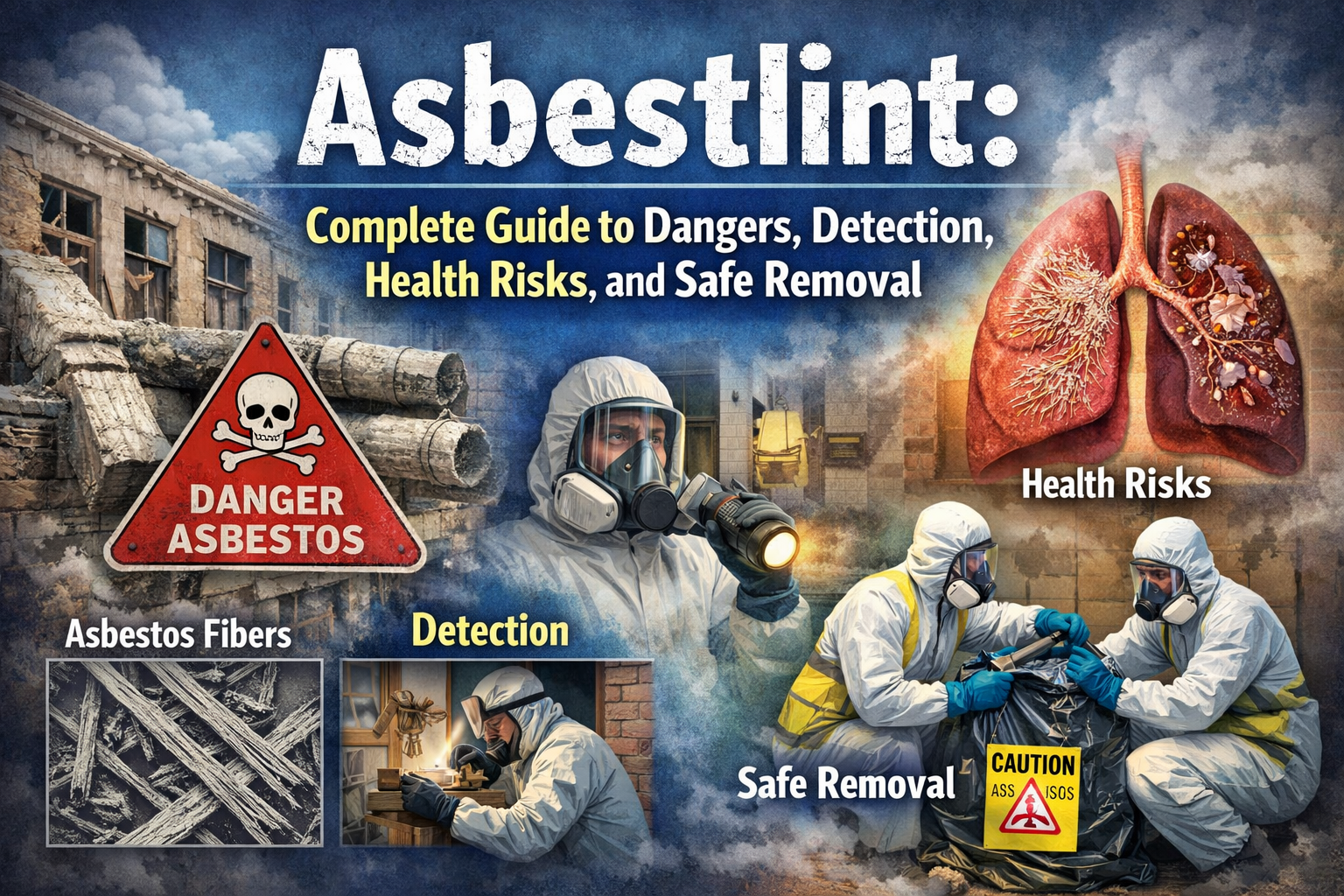
Asbestlint may not be a term you’ve heard before — but its underlying risk is real, dangerous, and often overlooked. Although “asbestlint” itself isn’t an official industrial category, it’s commonly used to describe fine, lint‑like asbestos fibers released from aging asbestos‑containing materials (ACMs) that can become airborne and pose serious health threats when inhaled.
In this guide, we’ll break down everything you need to know: what asbestlint refers to, why it’s hazardous, where it’s found, how you identify it, and — most importantly — how to deal with it safely.
1. Introduction
Understanding the Hidden Dangers of Asbestlint
Although asbestos was once prized for its heat resistance, strength, and durability, we now know it’s one of the most dangerous workplace exposures in history. When asbestos materials break down, they release microscopic fibers — often described colloquially as asbestlint — that can remain suspended in the air, unnoticed and undetected, yet deadly if inhaled.
Today, exposure to asbestos and its fine dust remains a global health concern affecting workers and homeowners alike.
2. What is Asbestlint?
Definition and Core Properties
“Asbestlint” itself isn’t listed in material science databases or industrial safety standards — it’s a descriptive term used to denote microscopic, lint‑like asbestos fibers or dust produced when asbestos‑containing materials degrade, are disturbed, or wear down.
Unlike large, solid pieces of asbestos that might be visible during renovation or demolition, asbestlint consists of tiny fibers that float in the air, are invisible to the naked eye, and can travel deep into the lungs when inhaled.
3. Historical Context and Industrial Applications
A Legacy of Widespread Use
For much of the 20th century, asbestos was used extensively in industry because it resisted heat, chemicals, electricity, and corrosion. Its applications ranged from insulation and fireproofing to friction materials like brakes and gaskets.
Products containing asbestos — including woven tapes, cloths, insulation boards, roofing shingles, floor tiles, and more — were common from the 1920s through the 1980s. As these materials age, they can become friable (crumbly), releasing fibers that form what is loosely referred to as asbestlint.
Industrial Uses That Created Risks
- Power and industrial plants: Asbestos insulation wrapped around boilers, steam lines, and turbines.
- Shipbuilding: Asbestos cloth and rope used for fireproofing and insulation.
- Automotive: Brake linings, clutch facings, and gaskets containing asbestos.
- Construction: Ceiling tiles, textured coatings, cement products, and floor coverings.
This widespread use is why legacy asbestos dust — or “asbestlint” — can show up in older buildings and machinery long after the original use ended.
4. Health Risks of Asbestlint Exposure
How Airborne Fibers Harm the Body
When asbestos fibers are inhaled, they can penetrate deep into the lungs and become permanently lodged in lung tissue. These fibers are durable and resistant to chemical breakdown — your body can’t eliminate them, so they can persist for decades, causing chronic inflammation and genetic damage over time.
Mesothelioma — The Deadly Cancer
Mesothelioma is a rare but aggressive cancer of the lining around the lungs or abdomen. It is almost exclusively caused by asbestos exposure, and symptoms may take 20 to 50 years to appear.
According to global health authorities, asbestos exposure contributes to hundreds of thousands of deaths every year — both from cancer and other respiratory diseases.
Other Major Health Effects
- Lung cancer: Asbestos exposure significantly increases lung cancer risk — especially for smokers.
- Asbestosis: Scarring and stiffening of lung tissue, making breathing progressively difficult.
- Pleural diseases: Thickening of the lung lining, fluid accumulation, and pleural plaques.
These conditions often have long latency periods, meaning symptoms may not emerge until years or decades after exposure.
5. Common Places Where Asbestlint Can Be Found
Older Buildings and Renovation Sites
Because asbestos was widely used until the late 20th century, structures built before the 1990s often contain ACMs. When these materials age or are disturbed — for example during renovation, drilling, sawing, demolition — microscopic fibers can be released into the air as dust-like particles or “asbestlint.”
Industrial and Mechanical Settings
Areas with legacy insulation, pipe lagging, boiler jackets, gasket materials, and friction components from older equipment are common sources of airborne asbestos fibers. Even routine maintenance can disturb these materials and release fibers.
Hidden Hotspots in Buildings
- Ceiling and floor tiles
- Textured wall coatings
- Insulation around HVAC ducts and plumbing
- Behind access panels and mechanical rooms
- Old ductwork and ventilation systems
These areas can harbor accumulations of fine, dusty fibers that look like ordinary dust — but contain asbestos.
6. Identifying and Testing for Asbestlint
Why You Can’t Rely on Visual Inspection
Microscopic asbestos fibers are often indistinguishable from harmless dust. Visually inspecting a surface won’t reveal whether asbestos fibers are present — attempting closer inspection without proper precautions can actually release more fibers into the air.
Safe Identification Approach
The only reliable way to confirm asbestos content — whether in visible materials or dust — is professional testing:
- Certified inspectors collect samples using controlled methods.
- Samples are analyzed in an accredited laboratory.
- Air sampling may be done to measure airborne fiber concentrations.
Never attempt DIY sampling, as disturbing the material increases health risks.
7. Managing and Removing Asbestlint Safely
Avoid Disturbing the Material
If you suspect asbestos fibers or asbestlint — do not sweep, vacuum, or brush them up. Ordinary cleaning can re‑disturb fibers and increase airborne concentrations, raising exposure risks.
Professional Abatement Protocols
Certified asbestos removal professionals follow stringent procedures:
- Containment: Setting up plastic sheeting and negative air pressure zones.
- PPE: Full respirators with HEPA filters, protective suits, and decontamination protocols.
- Continuous monitoring: Ensuring airborne fiber levels are controlled.
- Safe Disposal: Double‑bagging and transporting to licensed facilities with documentation.
This structured approach minimizes risk to workers and building occupants.
8. Safety Regulations and Compliance
OSHA and Regulatory Standards
Occupational safety agencies like OSHA have specific standards to protect workers:
- Strict exposure limits for airborne asbestos fibers.
- Mandatory training and hazard communication for employees in potential exposure zones.
- Engineering controls and personal protective equipment requirements.
There is no known safe exposure level to asbestos; any exposure carries some risk, which is why controlling and minimizing airborne fibers is essential.
9. Modern Alternatives to Asbestos
Asbestos is no longer widely used in new construction. Safer alternatives include:
- Fiberglass insulation — widely adopted thermal insulation solution.
- Mineral wool (rock wool/slag wool) — fire‑resistant and durable.
- Ceramic fibers — stable at high temperatures.
- Aramid fibers (e.g., Kevlar) — high strength and heat resistance.
These materials provide the benefits once sought from asbestos without the extreme health risks.
10. Best Practices for Managing Asbestlint Risk
Proactive Inspections
If your building or facility was constructed before the late 20th century, schedule professional asbestos inspections as a precaution.
Training is Critical
Workers and maintenance staff should understand how to recognize potential asbestos risks and follow safety protocols. Awareness prevents unintentional disturbance of hidden ACMs.
Emergency Response Planning
Have procedures in place should asbestos materials be disturbed inadvertently — this includes immediate area isolation and contacting certified professionals for assessment and cleanup.
11. Steps to Take if You Suspect Asbestlint
- Stop work immediately and restrict access.
- Inform building occupants about the potential hazard.
- Contact accredited inspectors for sampling and analysis.
- Document all findings, communications, and actions.
- Follow professional guidance if remediation or removal is recommended.
12. Conclusion
Asbestlint may not be a formal industrial classification, but the concept it represents — fine, airborne asbestos fibers — reflects a real and serious hazard. From older buildings to industrial legacy materials, these microscopic fibers can hide in dust and debris, posing a long‑term threat to human health.
By understanding the risks, recognizing where they may occur, and partnering with trained professionals for testing and removal, you can protect yourself, your workers, and your community from the hidden dangers of asbestos fibers. Awareness, prevention, and compliance are the most powerful tools in combating the lasting legacy of asbestos.
ALSO READ: Cellulogia – Complete Guide to Causes, Genetics, Natural Treatment & Real Results (2025)