
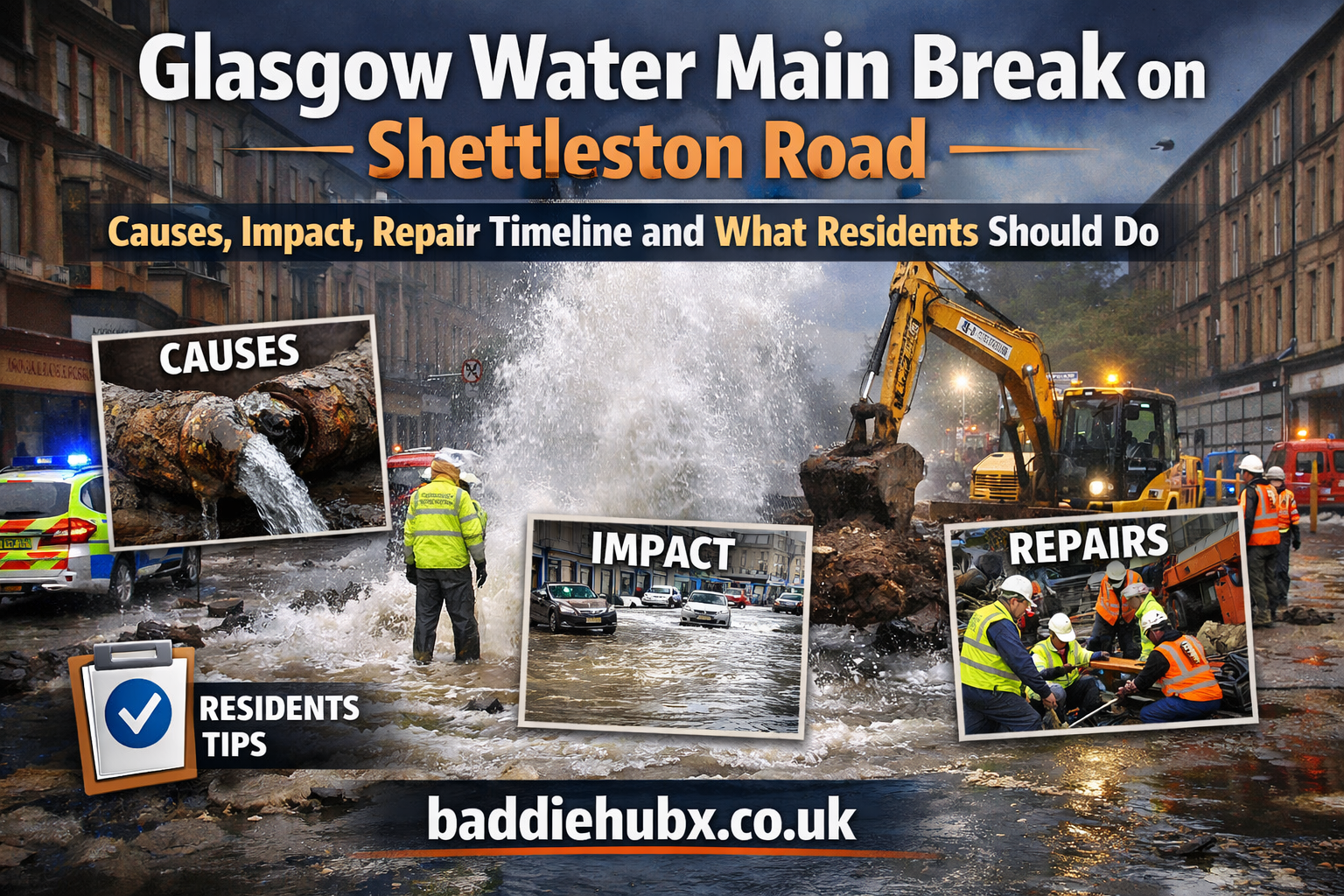
The Glasgow water main break on Shettleston Road was a major infrastructure incident that affected residents, commuters, and local services in the East End of Glasgow. What started as a sudden rupture of a crucial underground pipeline quickly became a significant event — causing flooded streets, water supply outages, road closures, and widespread disruption across the community.
In this comprehensive guide, we explore what happened, who was affected, the response by authorities, and what steps residents and businesses can take now and in the future.
What Happened During the Glasgow Water Main Break on Shettleston Road
On the morning of May 29, 2025, a major water supply main beneath Shettleston Road ruptured unexpectedly, releasing a large amount of water onto the road surface, pavements, and nearby properties.
The break occurred near the junction of Shettleston Road and St Mark Street in Glasgow’s G32 postcode area, a busy mixed-residential and commercial section of the city. Scottish Water crews were immediately dispatched to assess the situation and begin emergency response operations.
Timeline of the Shettleston Road Water Main Burst
When and Where the Water Main Failure Occurred
At approximately 8:30 AM, local residents first reported a loud crack and significant water gushing onto the roadway — signifying a major break rather than a minor leak.
Within minutes, water levels on the surface rose, making parts of the road hazardous for vehicles and pedestrians and triggering concern among households about immediate loss of supply.
Scale of the Disruption
How Serious Was the Glasgow Water Main Break?
This was not a routine pipe leak; the rupture involved a large-diameter supply line, one that fed multiple blocks of residences and local businesses in the East End of Glasgow.
Along with flooding, the break immediately caused:
- Complete loss of water supply to many homes
- Reduced pressure in other connected properties
- Discolouration of tap water where flow remained available
- Road closures and bus diversions
- Significant economic disruptions for local businesses
Areas and Residents Impacted in East End Glasgow
Residents living along Shettleston Road — from the areas near Old Shettleston Road to Fernan Street — were among the hardest hit. Many households suddenly had no running water, forcing families to rely on bottled or stored supplies.
Nearby side streets, housing blocks, and small businesses — including shops, cafés, takeaways, and offices — also experienced either complete supply loss or intermittent pressure issues.
Impact on Residents & Community
Loss of Water Supply and Reduced Pressure
The most immediate consequence of the break was the loss of running water in homes and flats. Without tap water, residents faced challenges with cooking, drinking, bathing, washing dishes, and flushing toilets — basic daily tasks most take for granted.
Many reported discoloured water (brownish or cloudy) as pipe disturbance stirred up sediment — a common result after major mains work.
Impact on Elderly and Vulnerable Residents
Elderly residents and those with limited mobility were particularly affected. With no easy means to fetch bottled water or boil water for hygiene, these individuals faced heightened hardship during the outage.
Thankfully, Scottish Water offers a Priority Services Register that can support customers with special needs during unplanned interruptions.
Business & Economic Impact
Effect on Local Businesses Along Shettleston Road
Small local businesses near the break site felt immediate financial strain. With no water, cafés could not prepare food or drinks, shops had trouble offering basic services, and takeaways struggled with sanitation requirements.
Footfall dropped sharply as customers avoided the area due to road closures and water worries, compounding revenue losses for already stressed small enterprises.
Traffic & Public Transport Disruption
Road Closures and Traffic Chaos on Shettleston Road
Because the burst occurred beneath a busy thoroughfare, authorities were forced to close sections of Shettleston Road to allow emergency crews to work safely.
Bus services were diverted, and traffic congestion increased on alternate routes as commuters navigated around the shutdown stretch.
Pedestrian safety was also a concern, with water pooling near pavements and potential slip hazards in areas where underground excavations were underway.
Emergency Response & Repairs
How Authorities Responded to the Shettleston Road Water Main Break
Soon after the rupture was reported, Scottish Water engineers worked to:
- Locate and assess the damaged section
- Isolate the broken pipe to prevent further water loss
- Install safety barriers around the work site
- Coordinate traffic management and emergency services
Teams from Scottish Water and local council traffic crews worked together to reroute vehicles and ensure public safety while repair efforts continued.
Step-by-Step Water Main Repair Process
How a Burst Water Main Is Repaired
Repairing a broken water main is a complex and hazardous task that generally includes:
- Isolating the damaged section: Valves upstream are shut to stop water flow.
- Draining excess water: Before excavation can begin.
- Excavation: Digging into the road surface and soil to expose the pipe.
- Repair or replacement: Removing the broken section and replacing it with a new piece of pipe or reinforced sleeve.
- Testing the repair: Ensuring the pipe holds under pressure and poses no further risk.
- Refilling and road restoration: Backfilling the trench, compacting soil, and repaving the road surface.
This work requires careful coordination to avoid damaging nearby utility services and to ensure worker safety.
Estimated Repair Timeline
How Long Will Water Supply Disruption Last?
The time it takes to fix a burst main — and fully restore supply — can vary widely depending on factors such as:
- Complexity of the break
- Location and accessibility of the pipe
- Traffic management requirements
- Weather conditions
Generally, many mains bursts can be managed within 24–48 hours, although larger breaks may take longer. In some cases, temporary supply measures such as bottled water distribution may be put in place for affected residents until full service is restored.
In Shettleston Road’s case, reports indicated that some residents could see pressure return within a day, while full restoration might take several days depending on pipe flushing and testing requirements.
Health & Safety Guidance
Is the Water Safe to Use After Restoration?
After any water main repair, authorities often warn that tap water may initially appear:
- Brown or rusty — due to sediment disturbance
- Cloudy or milky — because of trapped air in the system
These conditions are typically temporary and not harmful, but residents are advised to run cold kitchen taps until the water clears before drinking or cooking with it.
If discolouration persists, customers should contact the utility helpline for investigation.
What Residents Should Do Right Now
Practical Advice for Shettleston Road Residents
If you live in the affected area, these steps will help manage disruption:
✅ Use bottled or boiled water for drinking and food prep
✅ Conserve remaining water until supplies are dependable
✅ Run cold taps to flush lines once service returns
✅ Report leaks or issues to Scottish Water’s emergency line: 0800 0778 778
✅ Check official channels for updates (website, social media)
Prioritize delivery of safe water for elderly and vulnerable household members during outages.
Why Water Main Breaks Happen in Glasgow
Common Causes of Urban Water Main Failures
Water main breaks like the one on Shettleston Road typically stem from:
- Ageing infrastructure: Older cast-iron pipes are prone to corrosion and fail under stress.
- Ground movement: Freeze–thaw cycles and soil shifts stress underground networks.
- Pressure surges: Sudden changes in flow can crack weak sections.
- Heavy traffic above: Vibration and soil compaction strain shallow pipes.
Glasgow’s water and wastewater infrastructure, like many older cities, contains a mix of modern and legacy materials — making regular investment crucial to preventing failures.
What the Shettleston Road Incident Reveals About Glasgow’s Water Network
Ageing Infrastructure Challenges
The Shettleston Road break is unfortunately not an isolated event. Similar mains ruptures have occurred in other parts of Glasgow, including major breaks that affected tens of thousands of customers in past years due to old pipeline networks struggling under modern demands.
Long-term investment — both in modern materials and proactive inspection technology — is essential if Glasgow is to reduce the frequency and severity of such incidents.
Preventing Future Water Main Breaks
How Similar Incidents Can Be Reduced
To minimize future disruption, advocates and utility planners suggest:
📌 Replacing old cast-iron mains with modern resilient materials
📌 Using real-time monitoring systems to predict weak points
📌 Conducting frequent inspections in high-risk zones
📌 Community reporting of leaks and pressure issues early
Communities can help by reporting unusual water behavior, such as odd noises in pipes, sudden drops in pressure, or discolouration before it becomes a bigger failure.
Lessons Learned from the Shettleston Road Water Main Failure
This incident illustrated several key takeaways:
✔ Importance of fast emergency response
✔ Need for clear communication with residents
✔ Value of contingency planning for basic utilities
✔ The vulnerability of older water infrastructure under pressure
By learning from this and past breaks, service providers can improve both preparedness and public trust.
Frequently Asked Questions (FAQ)
What Caused the Water Main Break at Shettleston Road?
The rupture was likely due to ageing pipes under pressure, exacerbated by ground stress and water demand.
How Long Did the Water Supply Disruption Last?
Restoration timelines varied, with some supply returning within a day, and full restoration taking longer depending on testing and flushing requirements.
Were Businesses Affected?
Yes — many shops and businesses struggled with loss of water and reduced customer access due to road closures.
Can Similar Breaks Happen Again in Glasgow?
Yes — without ongoing infrastructure upgrades and maintenance.
What Should Residents Do After Water Supply Is Restored?
Run cold taps until water runs clear, avoid using suspect water for cooking initially, and stay informed via official channels.
Conclusion
The Glasgow water main break on Shettleston Road was more than a temporary inconvenience — it was a stark reminder of how critical and vulnerable urban water infrastructure can be. From flooded roads and disrupted water supply to traffic diversions and community impacts, the rupture underscored the importance of rapid response, transparent communication, and long-term investment in resilient systems.
As Glasgow plans for future growth and climate pressures, prioritizing maintenance, modernizing pipe networks, and empowering residents with information will be essential to building a safer, more reliable water network for all.
ALSO READ: Türk Idla: Meaning, Origin, Digital Identity & the Rise of a New Turkish Creative Movement